
The olive tree played and still plays a great role in Mediterranean cuisine and everyday life. The olive tree was very important and many cultures have recognized the value of this tree and gave it a special place in their life. For example the ancient Greeks used to give to every winner of the Olympic Games an olive wreath, taken from a sacred tree. This symbol had more power and meaning than gold or silver medal. The olive tree represented for them, the kindness and nobility and of course the peace.
The olive tree can be found in sub-tropical areas mainly in Mediterranean, but also in South America and in United States of America.
By its nature is a great multipurpose tree. We can use everything that comes from this tree in many ways and for a lot of applications. We can use the fruit, the wood the leaves. It produces great wood for fire; lasts a long time and makes great coals. It gives very good heat. Also the elegant wood is very good for carpentry and knife handles.
The most famous products that this tree makes are the olive oil and the olives of course. The olive oil is probably the best oil someone can use for cooking, making a simple salad or pie to more complicated dishes. The olive oil is the most important part in the Mediterranean diet.
I would like to share with you, a recipe that preserves the olives for eighteen months. It is very simple and it is a great add to your food supplies, either for everyday use or emergency. It’s a project that we do it in my home and it’s pretty common here.
Let’s say that you are going to make 10 kilos (22 lbs) of black olives. As I said before it’s the best for eating. The olives shouldn’t be green but light purple or black, indicates that aren’t unripe or to mature. Also the quantity is enough for a 4 member family; of course you can make more if you like.
First, you must carve the olives in the middle, deep enough but not to hit the kernel. Then you put the olives in a big bowl or bucket covered with water. For ten days, you have to change the water daily. This process is necessary, for getting rid of the bitterness of the olives. You cannot cut an olive from a tree and eat it immediately, it’s to bitter for that.

After the ten days passed, the next step follows; you are going to need 1 kilo (2.2 lbs) of coarse salt,2lts (0,5 gallon) wine vinegar,4lts( 1 gallon approx.) water, one cup of oregano,500ml (0.52 quart)olive oil. For remembering the proportions better, the general rules are: for every kilo (2,2lbs) of olives, you need 100gr (3.5ounces) of salt. For every 2 parts of water you need 1 part of vinegar. Oregano is matter of taste you can add more or less, depends on your likes.

To continue with our project; you spill the water from the bowl and you put the olives in another clean and dry bowl(or bucket).You mix the salt with half cup of the oregano and you are ready to salt the olives. The best way to do that is taking couple handfuls of olives, keep close a small bowl, put the olives there and put some good amount of mixed salt and oregano on them.
Then you can place them in the container you are going to store them. After this process you should have a container with olives. Add the water (4 liters) and the vinegar (2ltrs).Add the rest of the oregano (optional). Top up with the 500ml of olive oil. You must store the olives in a cool and dry place; keep them closed for 40 days.
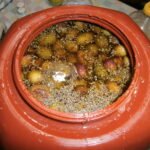
After this period you can open the container and check their taste; they might need a little more salt or vinegar, so you have to add some. If their taste satisfies your preference you can put some in a small jar, for everyday use on salads, sauces or on their own. You can keep the rest, stored in the container or put them in smaller jars it’s up to you.

With significant benefits for health and longevity, olives and their products are valuable components of our daily diet.This recipe is easy to make and i think you should give it a try.
Special Note: Individuals that must follow a low sodium content (especially hypertensive) diet should be careful with the olives as they are high in sodium. Avoid pickled olives and check the labels before consumption.